

Psychics Live ReadingIPsychic


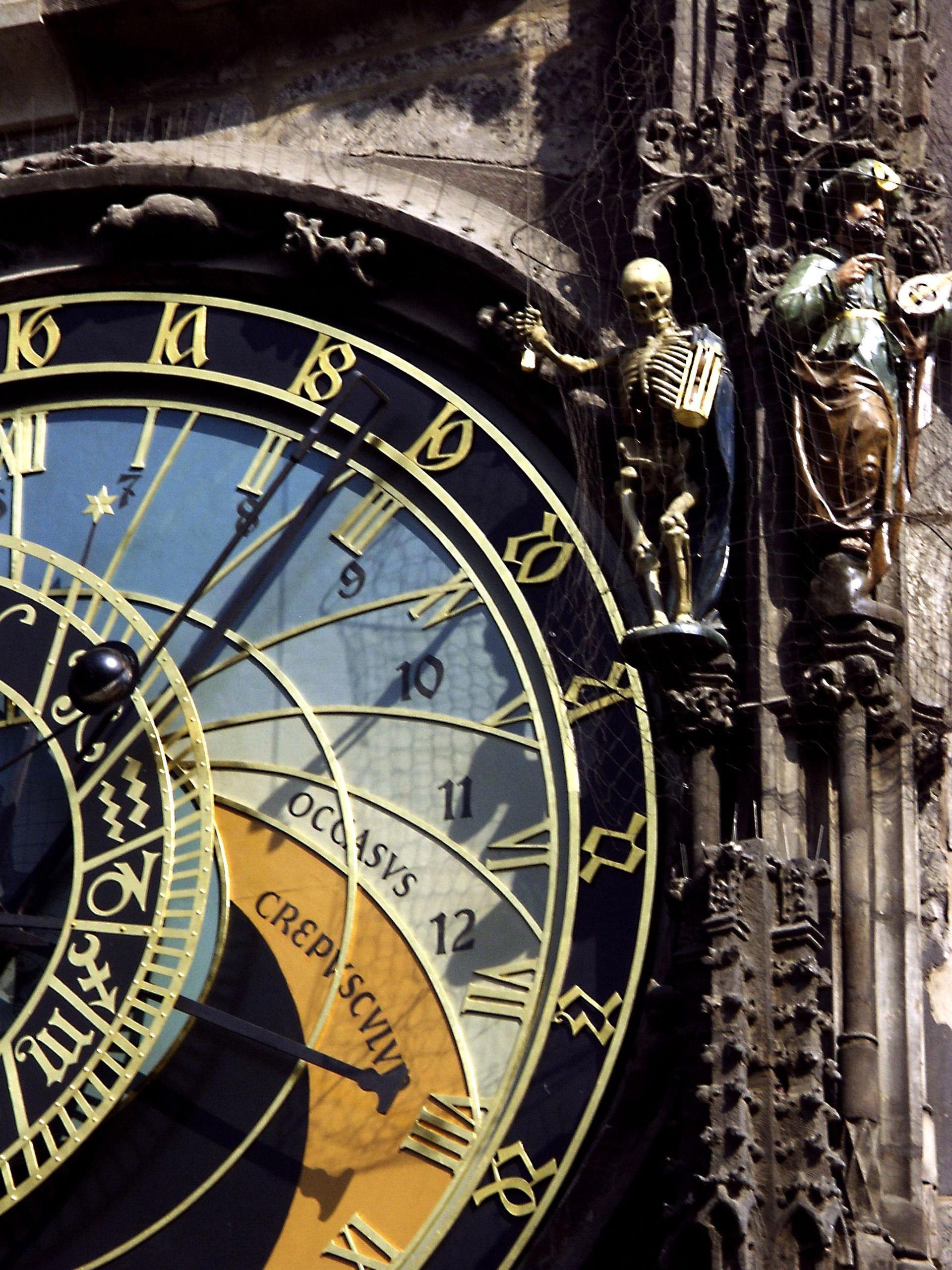
The number 7 appears with unusual consistency across cultures, religions, sciences, and spiritual traditions. Seven days in a week, seven notes in a diatonic scale, seven colours in a rainbow, seven classical planets, seven chakras, seven deadly sins, seven continents, seven wonders of the ancient world. No other single digit occupies this much cultural real estate. That frequency is not a coincidence. It reflects something about how human beings have always perceived the number 7 as a threshold between the ordinary and the sacred.
In short: The number 7 is considered a symbol of spiritual perfection, inner wisdom, and completeness across numerology, astrology, religion, architecture, and cultural tradition. It represents the bridge between the material world (4) and the divine (3), and appears more frequently in sacred and symbolic contexts than any other single digit.
This guide covers what the number 7 means in numerology, astrology, religion, tarot, and architecture, and why it holds the position it does.
In numerology, 7 is the number of the seeker. It represents introspection, analytical thinking, spiritual inquiry, and the pursuit of deeper truth. People with a Life Path 7 are drawn to research, philosophy, solitude, and questions that do not have easy answers.
The 7 vibration is not social or outward-facing. It operates internally. Where the number 3 communicates and the number 5 explores the external world, 7 turns inward. It examines, questions, and seeks understanding beneath the surface. It is often called the number of wisdom, but it is more accurately the number of the search for wisdom. The 7 does not assume it already knows.
In a numerological chart, 7 also carries a shadow side. Isolation, emotional withdrawal, and a tendency toward scepticism that hardens into cynicism are all risks. The challenge for anyone strongly influenced by 7 is balancing the need for inner depth with the need for human connection.
For a full breakdown of all nine life path numbers and how to calculate yours, see our guide to life path numbers and how to use them.
Key takeaway: In numerology, 7 represents introspection, spiritual seeking, and analytical depth. It is the number of the inner journey rather than the outer one.
The number 7 in astrology traces back to the seven classical planets visible to the naked eye, the celestial bodies that ancient astronomers could observe without a telescope. These seven planets became the foundation of Western astrology and gave their names to the seven days of the week:
The later discovery of Uranus (1781), Neptune (1846), and Pluto (1930) expanded the astrological system, but the original seven remain the backbone of chart interpretation. The fact that the weekly cycle, humanity’s most fundamental time structure, is built on seven planetary bodies reinforces the number’s association with cosmic order.
Key takeaway: The number 7 in astrology reflects the seven classical planets, which defined both the days of the week and the original framework of astrological interpretation.
No number appears more frequently in the world’s sacred texts than 7. Its presence across unrelated religious traditions suggests that something about the number resonates at a deep structural level with how humans understand completeness and the divine.
In Christianity and Judaism: God rested on the seventh day after creation, establishing the Sabbath. The Book of Revelation is structured around sevens: seven churches, seven seals, seven trumpets, seven bowls. The menorah has seven branches. The Torah references the number 7 hundreds of times.
In Islam: There are seven heavens, pilgrims walk seven times around the Kaaba during Hajj (tawaf), and the sa’i ritual involves walking seven times between the hills of Safa and Marwah.
In Hinduism: The bride and groom walk seven times around the sacred fire (saptapadi) during the wedding ceremony, each circuit representing a vow. There are seven higher worlds and seven lower worlds in Hindu cosmology.
In Buddhism: The newborn Buddha is said to have taken seven steps in each of the four directions. Seven represents ascent toward enlightenment.
In Kabbalah: Protective red string bracelets are made by wrapping long strands seven times around the thumb before cutting. Seven represents the seven lower sefirot, the divine attributes that interact with the material world.
Key takeaway: The number 7 appears across Christianity, Judaism, Islam, Hinduism, Buddhism, and Kabbalah as a symbol of divine completeness, spiritual fulfilment, and sacred order.
In ancient architecture, the number 7 was understood as the sum of 3 (representing heaven or the divine) and 4 (representing earth or the material world). The combination of 3 + 4 = 7 symbolised the union of the spiritual and the physical, the point where the two planes meet.
This principle informed the design of sacred structures, including the Egyptian pyramids, where the geometry encoded relationships between 3, 4, and 7. The Great Pyramid’s proportions reflect this interplay between the triangle (3 sides above ground) and the square base (4 sides), creating a structure that literally bridges earth and sky.
The same principle appears in Gothic cathedral design, where the number 7 influenced window patterns, spire proportions, and the layout of sacred spaces intended to connect the worshipper with the divine.
Key takeaway: In sacred architecture, 7 = 3 (heaven) + 4 (earth). It represents the equilibrium between the divine and the material, and this formula shaped the design of ancient and medieval sacred structures.
In the Major Arcana, the seventh card is The Chariot. It represents willpower, determination, triumph through discipline, and forward momentum achieved by harnessing opposing forces. The Chariot does not suggest passive victory. It depicts a figure actively controlling contradictory energies (often shown as two sphinxes or horses pulling in different directions) through sheer focus and resolve.
This aligns with the numerological meaning of 7: mastery through inner work. The Chariot wins not by force but by alignment, bringing conflicting impulses under conscious direction. It is the card of someone who has done the internal work and is now ready to move forward with clarity.
The number 7 also recurs across the Minor Arcana. The seven of each suit typically represents a moment of assessment, reflection, or challenge that requires inner resources rather than external action, again reflecting the introspective, seeking nature of the number.
Key takeaway: In tarot, 7 appears as The Chariot (Major Arcana) and across the Minor Arcana as a number of inner mastery, assessment, and triumph through self-discipline rather than external force.
Beyond formal spiritual systems, the number 7 has embedded itself in cultural traditions, folklore, and everyday language worldwide.
In Japan: The Seven Lucky Gods (Shichifukujin) represent fortune, longevity, and happiness. The Festival of Seven Herbs (Nanakusa no Sekku) is celebrated on January 7th each year, where eating a rice porridge with seven spring herbs is believed to bring health for the coming year.
In Indigenous Australian culture: The Seven Sisters (the Pleiades star cluster) form one of the oldest continuing narratives in human history, dating back tens of thousands of years. The stars also appear on the Australian flag.
In Cherokee tradition: There are seven clans, each with a specific role in the social structure of the nation.
In Western folklore: « Seventh heaven » denotes the highest state of happiness. Seven years of bad luck follow a broken mirror. Snow White lives with seven dwarfs. Fairy tales and superstitions alike gravitate toward the number.
In science: There are seven basic crystal systems in mineralogy. The tangram puzzle consists of seven flat shapes. Research in cognitive psychology suggests that human short-term memory can hold approximately seven items at once, a finding known as Miller’s Law.
Key takeaway: The number 7 appears across Japanese, Indigenous Australian, Cherokee, and Western traditions, as well as in science and psychology. Its cultural reach extends far beyond any single spiritual system.
★ Life Path Numbers: What Yours Reveals and How to Use It
In numerology, 7 represents introspection, spiritual seeking, analytical thinking, and the pursuit of deeper truth. People with a Life Path 7 are drawn to research, philosophy, and solitude. It is considered the number of inner wisdom and the search for meaning beneath the surface.
The number 7 appears across virtually every major religion, spiritual tradition, and ancient culture as a symbol of divine completeness and perfection. Its consistent presence in the seven days of creation, seven classical planets, seven chakras, and countless other systems suggests that it represents a fundamental pattern in how humans perceive wholeness and cosmic order.
The seventh Major Arcana card is The Chariot, representing willpower, determination, and victory through inner discipline. Across the Minor Arcana, the sevens typically represent moments of assessment and challenge that require inner resources rather than external action.
The seven-day week originates from the seven classical planets visible to ancient astronomers: the Sun, Moon, Mars, Mercury, Jupiter, Venus, and Saturn. Each day was assigned to one of these celestial bodies, and this system was adopted across civilisations and persists to this day.
In sacred geometry and ancient architecture, 3 represents heaven or the divine and 4 represents earth or the material world. Their sum, 7, symbolises the union of the spiritual and physical planes, the point of equilibrium between the two. This principle influenced the design of pyramids, cathedrals, and other sacred structures.
In many cultures, 7 is considered lucky or protective. In numerology, however, it is not about luck in the conventional sense. It is about depth, wisdom, and spiritual alignment. The perception of 7 as lucky likely stems from its long association with divine completeness and sacred order across cultures worldwide.
Life Path 7 describes someone who is introspective, analytical, and drawn to deeper truths. They are the researchers and philosophers of numerology, often needing solitude to process their thoughts. The challenge for Life Path 7 is balancing the need for inner depth with meaningful human connection.
